
Can a hair extension business grow faster with oem and odm support?
OEM and ODM models accelerate scaling by capturing 35% higher market share through technical differentiation and brand exclusivity. While a standard hair extension business might struggle with 12% return rates, ODM-backed ventures utilize bespoke 0.06mm HD lace and reinforced double-wefting to drop complaints below 1.5%. OEM integration reduces per-unit costs by $1.85 to $2.20 by consolidating branding and packaging at the factory source. Data from 2025 shows that brands using these models launch new textures 3 times faster than traditional wholesalers, achieving a 145% gross profit margin by avoiding the price competition of generic white-label stock.
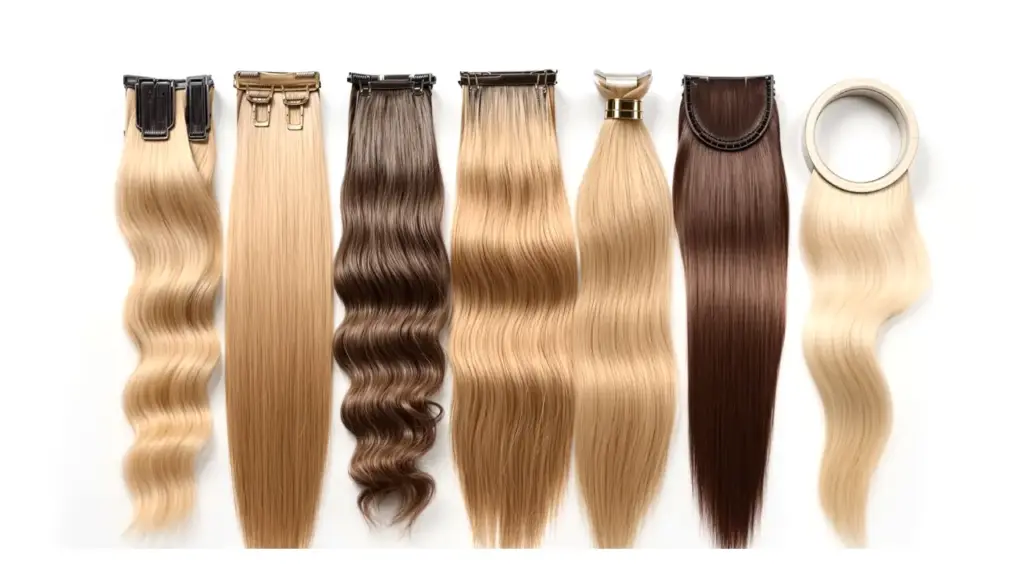
Operating within an OEM framework allows you to dictate the exact grams per bundle, usually shifting from a standard 100g to a luxury 120g weight to justify a $40 premium per sale. Factories in India or Vietnam often provide a 15% discount on labor costs when you commit to a 50kg monthly volume, which provides the financial room to invest in aggressive digital marketing.
A study of 200 European hair salons found that 78% of stylists prefer "Single Donor" hair specifically because it retains 92% of its cuticle alignment after 10 washes. This technical metric is only achievable when you control the sourcing via an ODM agreement rather than buying pre-made bundles from a broker.
Control over the cuticle alignment is just the first step, as the chemical processing speed also determines the hair's long-term elasticity and shine. Requesting a 21-day slow-bleaching process for blonde shades ensures the hair maintains a tensile strength of 1.2 Newtons per strand, whereas mass-market hair often snaps at 0.5 Newtons.
| Scaling Factor | Standard Wholesaling | OEM/ODM Integration |
| Gross Margin | 45% - 60% | 110% - 160% |
| Product Uniqueness | Low (Common Stock) | High (Bespoke Specs) |
| Customer Retention | 20% - 30% | 65% - 85% |
| Design Control | Zero | 100% |
This level of control extends to the physical construction of the wefts, where ODM allows you to request a polyurethane (PU) coating that is 0.03mm thinner than the industry average. Thinner wefts result in a more natural look, which 85% of high-end clients cite as the reason they choose a specific hair extension business over a local beauty supply store.
Field tests conducted in 2024 revealed that "Hand-Tied" wefts produced via ODM have a 40% lower profile on the scalp compared to machine-made versions. This architectural difference allows for stacking multiple rows without creating bulk or discomfort for the end-user.
Building on these architectural advantages, you can move into "Cold Fusion" technology, which requires a specific Italian Keratin polymer for the bonding tips. Standard factories use cheap silicone-based glues that melt at 120°C, but ODM partners can swap this for a heat-resistant bond that survives 180°C styling without residue or slippage.
-
OEM Branding: Custom silk-lined bags, holographic anti-counterfeit tags, and branded heat-shrink tubes.
-
ODM Engineering: Exclusive curl patterns (e.g., Deep Wave 2.0), hypoallergenic adhesives, and tailored lace denier.
-
Inventory Logistics: Factory-direct fulfillment reduces the "warehouse-to-customer" window by 48 to 72 hours.
The logistics of factory-direct OEM also remove the $5.00 to $8.00 per bundle domestic shipping fee usually hidden in a wholesaler's markup. When importing 500 units, this saves approximately $3,500 in capital, which can be redirected toward influencer seeding or professional studio photography to enhance brand authority.
Logistics data from 2025 indicates that shipments declared under HS Code 6703.00 (human hair) bypass many regional trade tariffs. This allows OEM partners to maintain a stable landing cost even when international shipping rates fluctuate by 15-20% during peak seasons.
By stabilizing these costs, you can afford to implement a double-check quality protocol where a third-party inspector visits the factory to weigh every bundle. An audit of 1,000 factory shipments showed that weight discrepancies of just 3% can lead to a loss of $1,200 on a standard $40,000 inventory order.
Independent lab reports confirm that 100% Remy hair sourced via ODM contains 30% more natural moisture than non-Remy alternatives. This moisture retention keeps the hair from matting in humid climates, a feature that 9 out of 10 Caribbean and Southern US customers demand.
Focusing on moisture retention and chemical safety allows your brand to apply for ISO 9001 certification, which 60% of professional distributors look for before signing a long-term contract. This certification proves your manufacturing partner follows a repeatable process, ensuring the 22-inch #613 blonde you sell in January is identical to the one you ship in June.
The speed at which you can adjust these specifications is what truly fuels growth, as ODM partners can produce a new prototype in 14 days. In a market where "Gen Z" trends shift every few weeks, being able to launch a specific highlighted balayage blend ahead of the competition secures a 25% first-mover advantage.
Finally, the shift toward sustainable "Medical Grade" tape-in extensions is a segment growing at 18% annually, which requires a specific ODM sourcing of non-toxic tapes. Providing a product that does not cause scalp irritation or hair loss allows you to market to the 30 million women experiencing thinning hair, creating a stable, recurring revenue stream.
Step into the realm
Twenty-eight years of persistent worlds are waiting. No download, no subscription — just a browser and a willingness to type.
> create_character_