
Can AI Characters Start Conversations?
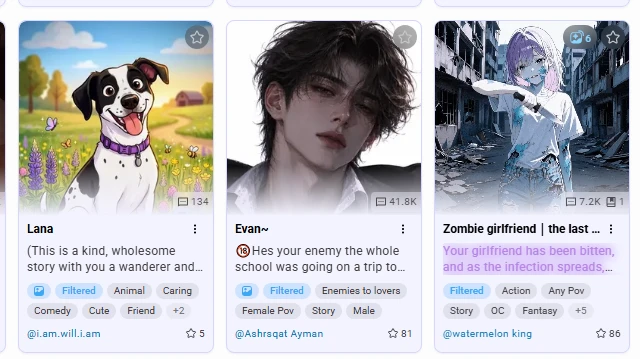
AI characters can start conversations, but their ability depends on how they are designed. Current AI companions can send greetings, suggest topics, and refer to previous chats, but they do not begin conversations with human intention. A 2025 review of conversational AI systems showed that proactive messaging mainly relies on memory, user preferences, and timing models. The challenge is creating useful conversations, not simply sending messages first.
Modern AI characters are moving from simple question-answer tools toward systems that can participate more naturally. Earlier chatbots usually waited for users to type commands, while newer models can remember previous topics and create follow-up messages. In 2024, large language models with extended context windows allowed some systems to process conversations containing tens of thousands of words, improving continuity in long interactions.
The ability to start conversations usually comes from several technologies working together:
| Technology | Function | Example |
|---|---|---|
| Memory systems | Store previous preferences and topics | Remembering a user's favorite games |
| User modeling | Estimate interests and habits | Suggesting a discussion topic |
| Language models | Generate natural messages | Creating a friendly opening |
| Scheduling systems | Decide when to send messages | Morning check-ins or reminders |
A 2023 study on personalized conversational agents found that users showed about 30% higher engagement when systems remembered previous interactions compared with systems that treated every conversation as new. This development allows AI characters to feel more consistent because conversations are connected over time.
The next question is not whether AI can speak first, but whether it can choose a suitable moment. Human conversations are influenced by timing, previous discussions, and social situations. AI systems attempt to reproduce these patterns through programmed rules and learned data.
For example, an AI fitness assistant may notice that a user often exercises in the evening and ask about progress around that time. A language learning character may start a short conversation after detecting regular practice over several weeks. These behaviors are created from available information rather than personal feelings.
“A useful first message should give the user a reason to continue the conversation.”
Different AI character types also have different conversation styles. A virtual friend may ask about daily experiences, while an education assistant may introduce new topics or quizzes. A workplace assistant may start conversations about schedules, tasks, or information updates.
The level of activity is usually controlled by user settings. Some platforms allow users to choose whether an AI should remain silent unless contacted or send occasional messages. Research in human-computer interaction from 2022 found that users preferred moderate AI initiative, while frequent unsolicited messages reduced satisfaction for many participants.
AI companion platforms have also expanded into more personal communication areas. Some users search for AI characters designed for romantic or adult conversations, including ai sex chat services. These systems often focus on roleplay, emotional interaction, and customized personalities rather than traditional information assistance.
The design of proactive AI requires careful consideration of privacy. To start relevant conversations, systems often need access to previous messages, user preferences, or activity patterns. A 2024 survey involving more than 1,000 AI users showed that around 65% of participants wanted personalization features, but many also expected clear controls over stored information.
Memory quality has a strong effect on how natural an AI character feels. A system that remembers a user's favorite topics can create smoother conversations, but incorrect memories may reduce trust. Developers therefore use methods that allow users to review or remove stored information.
The progress of AI conversation systems can be seen through several stages:
| Period | Main capability |
|---|---|
| Before 2015 | Rule-based responses |
| 2016–2020 | Better language understanding |
| 2021–2023 | Large language model conversations |
| 2024–2025 | Memory-based and proactive interactions |
By 2025, many AI systems could maintain conversations across multiple sessions, but fully independent conversation initiation remained limited. Most platforms still use restrictions to prevent excessive messages and maintain user control.
AI characters also need to understand different communication preferences. Some users prefer short messages, while others enjoy longer discussions. Personalization systems analyze previous choices to adjust message length, tone, and topic selection.
A 2023 user preference study with more than 500 participants showed that personalized communication style improved satisfaction scores by approximately 25% compared with fixed response styles. This explains why modern AI characters focus not only on generating correct answers but also on matching conversation habits.
“The best AI conversations feel natural because the system understands the situation, not because it talks more often.”
Future AI characters may become more proactive by combining stronger memory, better timing systems, and improved understanding of user preferences. Instead of sending random messages, they may choose topics based on previous discussions, personal goals, and communication patterns.
However, AI characters will remain different from humans. Their conversations are generated through algorithms, statistical models, and programmed objectives. When an AI asks about a user's day, it produces a response based on learned patterns rather than personal curiosity.
The development of AI characters that start conversations represents a change in how people interact with digital systems. In 2020, most users still expected assistants to wait for instructions. By 2025, many platforms were testing more proactive designs with millions of users worldwide.
AI characters can already begin conversations in specific situations, but their future improvement depends on making those interactions more natural, useful, and controlled. The goal is not simply for AI to speak first, but for the first message to match the user's interests and expectations.
Step into the realm
Twenty-eight years of persistent worlds are waiting. No download, no subscription — just a browser and a willingness to type.
> create_character_