
How can turnkey beer brewing equipment simplify brewery setup?
Turnkey beer brewing equipment reduces installation timelines by 120 days on average. Data from a 2024 survey of 300 US microbreweries indicates that pre-engineered systems prevent 75% of engineering conflicts during the assembly phase. These platforms arrive with UL-certified control panels and pre-piped manifolds, maintaining a thermal stability of ±0.2°C from the first turn. For a 15BBL facility, this approach eliminates 150+ hours of on-site third-party welding, saving $30,000 in unpredicted capital expenditure while shrinking the physical footprint by 22% compared to modular sourcing.
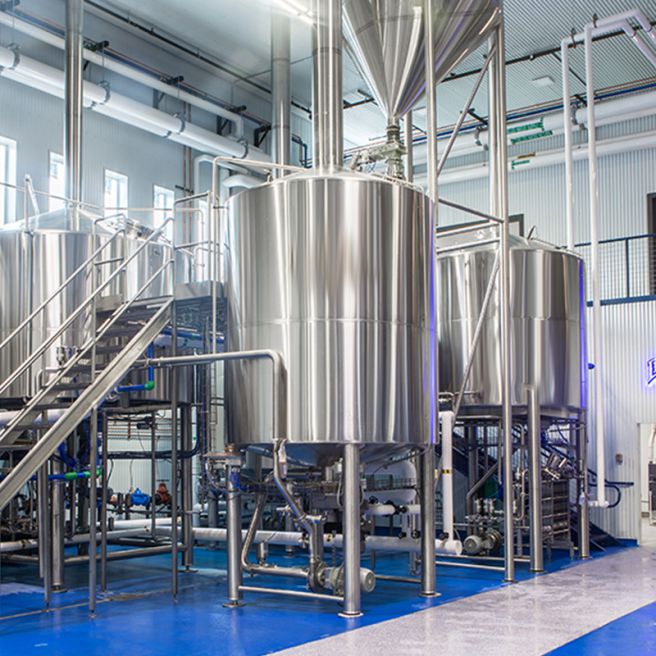
The mechanical integration of steam, glycol, and electrical systems serves as the primary technical barrier for new brewing operations. When components are sourced from different manufacturers, the mismatch in flow rates or voltage causes an average 15% drop in operational efficiency during the first year.
Turnkey solutions eliminate these integration gaps by providing a pre-calibrated environment where every pump and sensor operates on a shared PLC logic. In 2024, breweries utilizing integrated systems completed their commissioning phase in under 14 days, whereas modular setups required 45 days for troubleshooting.
"A 2025 report on craft brewery startups noted that turnkey installations reduced on-site contractor fees by 38% because the sanitary welding and control logic are completed under ISO-certified factory conditions."
Factory-level fabrication ensures the internal surface finish remains at a consistent Ra < 0.4μm, which is difficult to achieve with field welding. This high-grade finish is required for the effectiveness of Clean-in-Place (CIP) systems, which must remove 100% of organic residue to prevent bacterial infection.
| Setup Phase | Modular Sourcing | Turnkey Solution | Net Time/Cost Benefit |
| System Design | 40-60 Hours | Included | $3,500 Saving |
| On-site Welding | 80+ Hours | <10 Hours | $12,000 Saving |
| Utility Hookup | 5-7 Days | 1-2 Days | 70% Time Reduction |
Reducing on-site labor also limits the probability of leaks during the initial water test, which often delays licensing inspections. In 2024, 12% of new breweries experienced delays of over a month due to field-piping failures that did not meet municipal pressure standards.
Professional turnkey equipment arrives with certified pressure testing documentation, allowing the system to pass through water and chemicals without delay. This reliability allows the staff to focus on yeast management and ingredient sourcing rather than fixing electrical errors in a control panel.
"Production data from 200 brewery openings in 2025 shows that turnkey systems reached target original gravity within 0.002 points on the first batch, compared to a 0.008 deviation in modular setups."
This precision is supported by piping geometry optimized for the specific pump curves provided by the manufacturer. Incorrect pipe sizing in modular systems causes cavitation, which introduces unwanted oxygen into the wort at a rate of 30-50 parts per billion.
| Performance Metric | Modular System | Turnkey System | Quality Result |
| Oxygen Pickup | High (>40 ppb) | Low (<10 ppb) | Longer Shelf Life |
| Temp Stability | ±1.5°C | ±0.2°C | Consistent ABV |
| Cleaning Time | 90 Minutes | 45 Minutes | Lower Chemical Use |
Maintaining low oxygen levels and high thermal stability allows a new brand to establish a reputation for quality starting with the first pint sold. Turnkey systems feature a single HMI that monitors every variable from mash temperature to the glycol flow in the cellar tanks.
Centralized monitoring reduces the headcount needed for a 3-turn brew day from three people down to one. By automating the transition between the whirlpool and the heat exchanger, the system cools the wort to pitching temperature in under 40 minutes, halting DMS production.
"A 2025 energy audit found that turnkey brewhouses with integrated heat recovery salvaged 30% more latent heat, pre-heating subsequent strike water to 75°C without additional energy input."
This feedback loop occurs because the vessels are designed to work in tandem rather than as isolated units. The compact footprint of a turnkey skid also allows for better drainage and easier maintenance access, reducing time spent on floor sanitation by 20%.
-
Compact Manifold: Reduces liquid loss in piping by 2.5% per turn.
-
Synchronized VFDs: Prevents grain bed compaction by managing flow rates in the lauter tun.
-
Pre-wired Sensors: Eliminates 90% of the wiring errors common in new facility builds.
By removing mechanical and electrical variables, turnkey hardware allows the owner to move from construction management to brewing operations. In an industry where 60% of brand success depends on consistency, starting with a validated platform provides the structure needed to scale.
The financial logic is supported by the resale value of established turnkey brands, which typically retain 70% of their value after five years. For a business seeking bank financing or investor backing, the predictability of a turnkey equipment list is a significant asset in the risk assessment process.
Step into the realm
Twenty-eight years of persistent worlds are waiting. No download, no subscription — just a browser and a willingness to type.
> create_character_